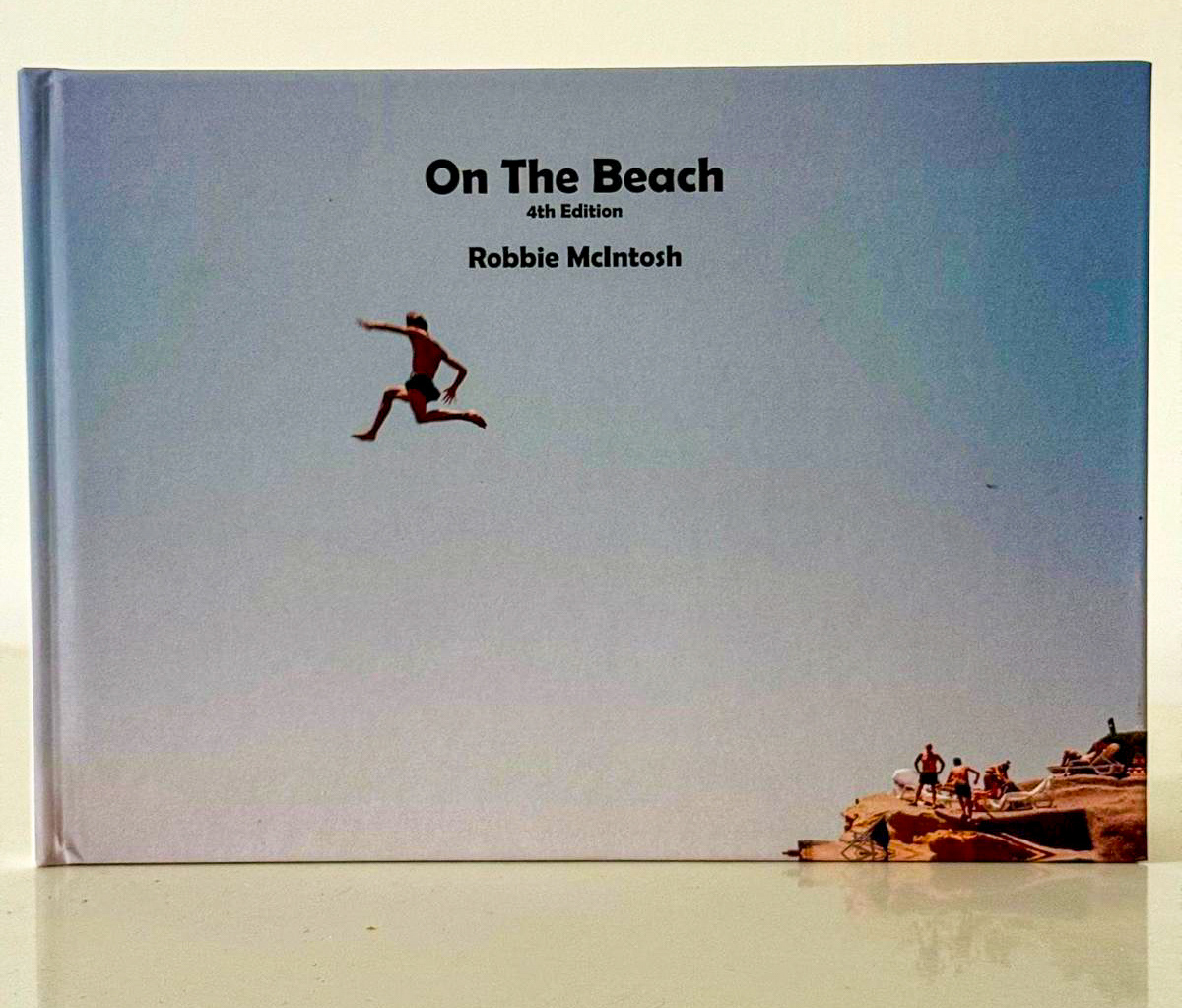
On The Beach is a work shaped by time rather than by a closed narrative intention. It unfolds through prolonged presence and repetition, the result of years spent frequenting Naples’ public beaches without the urge to summarize or explain them. This fourth edition does not reinvent the project, but subtly realigns its rhythm, allowing images and sequence to breathe together with renewed clarity.
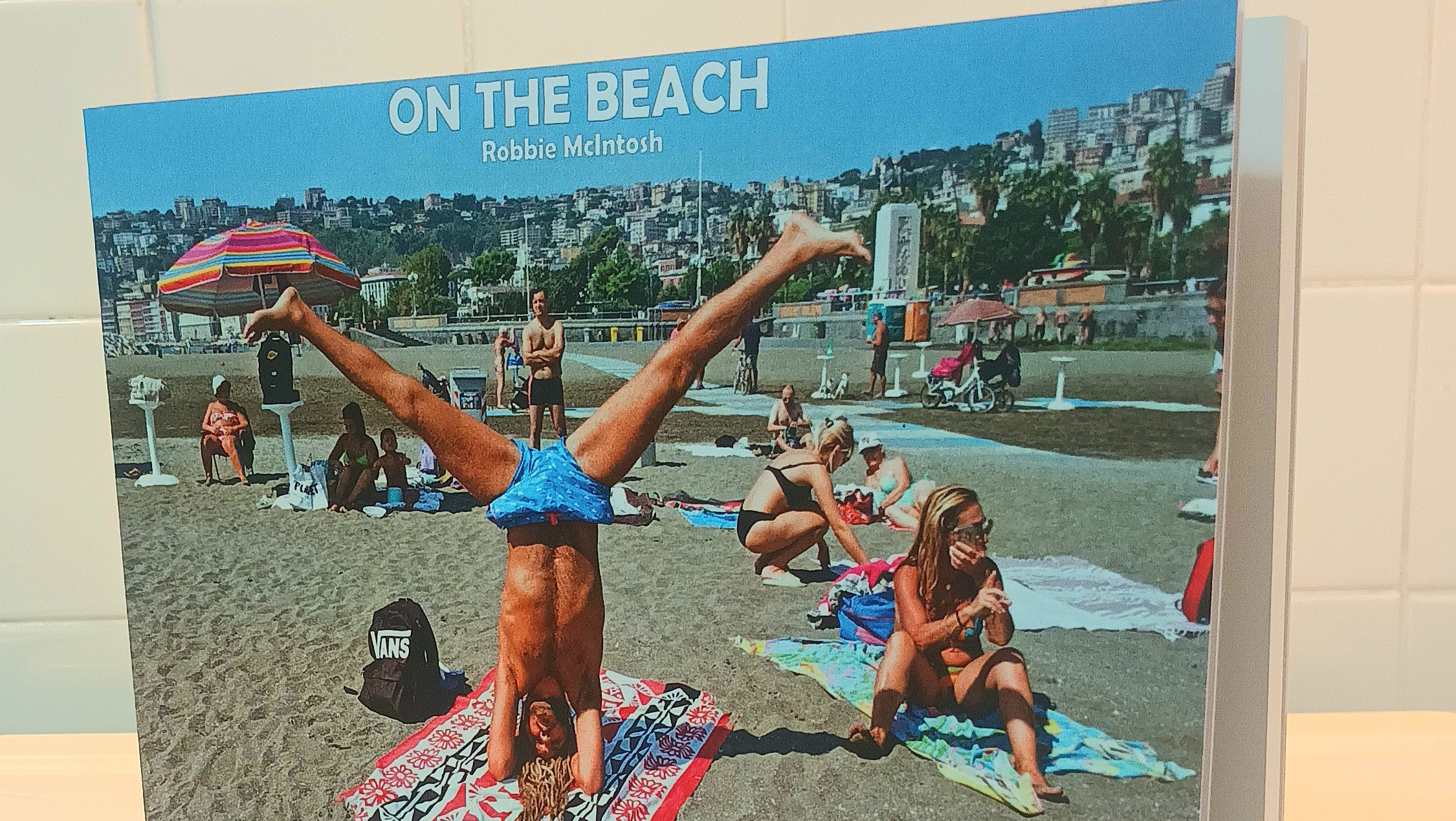
The book progresses without chapters or explicit narrative breaks. Images follow one another through proximity rather than linear development. The beach is never framed as a site of escape or spectacle, but as a dense social space where public intimacy, friction, affection and fatigue coexist. Bodies are not performing; they are simply present.
McIntosh photographs from within. The images avoid the exceptional or the picturesque, focusing instead on ordinary gestures, postures and side glances. Color is direct and unembellished, composition precise but never declarative. Meaning is not imposed. What emerges is a sense of presence built over time, grounded in trust and repetition.
Written by Boogie, the preface establishes the legitimacy of the process rather than interpreting the images. It emphasizes duration, lived experience and the human relationships developed during the making of the work. The tone is testimonial rather than analytical, positioning On The Beach as the outcome of sustained presence, not as a stylistic or conceptual exercise.
The afterword by Nadia Lee Cohen enters from a different angle. Brief and visceral, it bypasses analysis in favor of sensation. Cigarette smoke, tanning oil, leftover pasta in plastic containers evoke a shared physical reality, anchoring the work in the senses.
With the line “He is family,” Cohen moves the book from representation to belonging. On The Beach becomes not only a depiction of Naples, but an act of recognition. Her final question (“Has there ever been a better advert for Napoli?”) reads as a provocation rather than praise. If this is an “advert,” it is one stripped of idealization, rooted instead in everyday disorder and intimacy.
Preface and afterword operate as complementary counterpoints. Boogie frames the work through duration and process; Cohen claims its emotional and sensory impact. Between them, the images stand on their own. On The Beach does not seek immediate consensus. It asks for attention. It is a book about time, access and trust — and about what happens when a photographer stays long enough to stop photographing something and begin photographing from within.
° 24 x 17.5 hardcover
° 88 pages
° Preface by Boogie, postface by Nadia Lee Cohen
° € 40 plus shipping
AVAILABLE
For information, write me on Instagram
Or fill out the form below.
Thank you!